Serving Orcutt, CA and surrounding areas. (805) 269-8567
Every rainy season, Orcutt's clay-heavy soils push moisture upward into crawl spaces and floor framing. Professional vapor barrier installation stops that cycle - protecting your home's structure and improving energy efficiency whether you think about it or not.
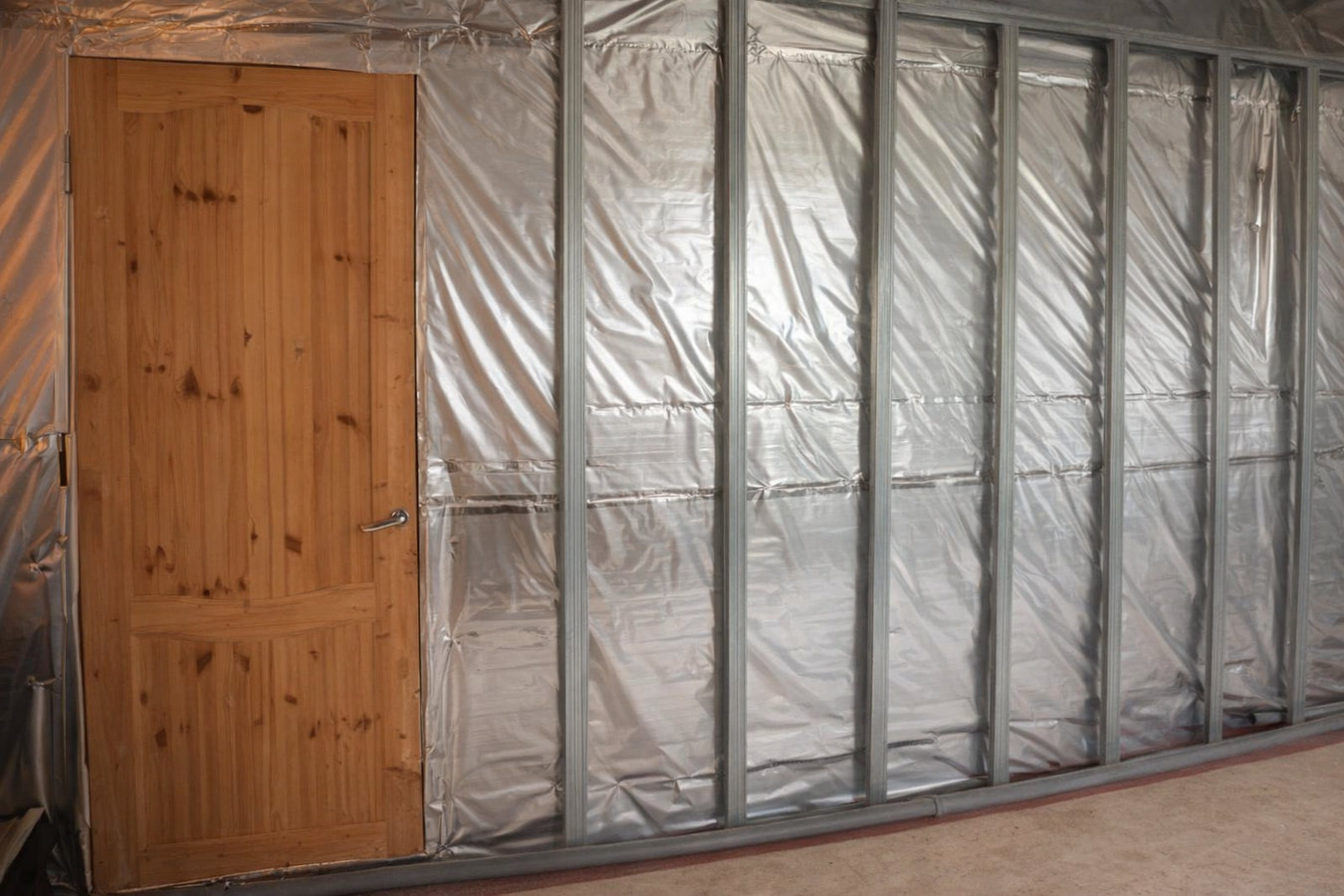
A vapor barrier is a sheet of thick plastic - typically 10 to 20 mils - installed in your crawl space to block moisture from moving through the ground into your home. Think of it as a raincoat for the underside of your house. Without it, water vapor from the soil silently works its way up into your floors, walls, and insulation - softening wood, feeding mold, and degrading the insulation that keeps your heating and cooling bills in check.
The quality of the installation matters as much as the material. A well-done job has no gaps, seams overlapped by several inches and fully taped, and edges secured up the foundation walls - not just lying flat on the ground where rising moisture can get behind the barrier at the perimeter. Thin barriers or ones left with loose edges tend to shift, tear, and bunch up over time in Orcutt's wet winters, defeating the purpose within a few years. This work connects closely with crawl space vapor barrier work - the two terms refer to the same category of service, and a proper assessment will clarify exactly what your crawl space needs.
Most homes in Orcutt were built between the 1950s and 1980s, when vapor barriers were either not required or installed with thin, low-grade plastic that has long since degraded. If your home was built before 1990 and the crawl space has never been inspected, there is a reasonable chance whatever is down there - if anything - is no longer doing its job.
If certain spots on your wood floors give a little underfoot, or a floor that used to feel solid now has some bounce to it, moisture damage to the wood underneath may be the cause. In Orcutt homes built before 1990, this is one of the most common signs that the crawl space has been taking on moisture for years without a proper barrier in place.
A persistent earthy or musty odor - especially one that intensifies during Orcutt's rainy season between November and March - is a strong signal that moisture is collecting under your home. That smell is often the first sign of mold or mildew beginning to grow on wood surfaces in the crawl space, and it typically means ground moisture has no barrier stopping it.
If you have ever looked into your crawl space with a flashlight and noticed wet soil, puddles after rain, or dark staining on the ground or on wood beams, those are direct signs that moisture is active under your home. Orcutt's winter rains can push water into crawl spaces that appear completely dry the rest of the year.
Termites, rodents, and other pests are drawn to damp, dark environments. If you have had pest control work done recently, or noticed signs of activity under the house, a damp crawl space may be part of what is attracting them. A properly installed vapor barrier removes one of the key conditions that makes crawl spaces hospitable to pests.
We start every job with a crawl space assessment before any numbers are committed to - a contractor accesses the space, measures it, checks what is already there, and looks for any moisture damage or prep work that needs to happen first. The written estimate you receive after that visit reflects your actual crawl space, not an average from a phone call.
On installation day, the crew lays heavy-duty barrier material across the ground, overlaps every seam by several inches and tapes them securely, then runs the edges up the foundation walls where they are fastened in place. Any existing debris or degraded material is removed and hauled away. When the work is done, we document it with photos and walk you through what was installed - because the work happens somewhere you cannot easily check yourself, you deserve a clear record.
Full coverage of the crawl space floor with heavy-duty, ground-rated sheeting - overlapped seams, taped joints, and edges secured to foundation walls.
Removal of old, cracked, torn, or misinstalled plastic that is no longer doing its job, followed by a complete new installation that meets current standards.
For homeowners doing both in one project - barrier installed first, insulation added on top in the correct sequence so each treatment performs at its best.
For homeowners who want a clear picture before committing to anything - a documented inspection with photos so you know exactly what is under your home.
Orcutt's rainy season runs roughly November through March. During those months, the soil under homes can hold significant moisture, and crawl spaces that seem dry in July can be noticeably damp by February. The clay-heavy soils common across the Santa Maria Valley hold water rather than draining it, which means the ground under your house can stay saturated well into spring even after the rains stop. That sustained moisture has to go somewhere - and without a barrier, it goes into your floor joists and insulation.
Orcutt is also close enough to the Pacific coast that marine layer and overnight humidity are regular features of the local climate, especially from May through August. Even without rain, that ambient coastal moisture can gradually work its way into an unprotected crawl space. Homeowners sometimes assume that because it does not rain in summer, moisture is not a concern - but the coastal air alone is enough to cause problems over time in an unsealed space.
Many crawl spaces in this area also have limited vertical clearance, making the work physically harder and slower than a typical installation. A local contractor with experience in Orcutt's specific housing stock will have a realistic sense of what your home requires and how long the work will actually take. We also offer attic air sealing for homeowners who want to address moisture and energy loss above the living space at the same time.
We ask a few basic questions - the age of your home, whether you have noticed any moisture issues, and whether you know if a barrier is currently in place. From there, we schedule an on-site visit before providing any numbers.
A contractor accesses your crawl space - usually through a floor hatch or exterior vent - and checks what is there. They look at the size of the space, the clearance available, whether there is existing moisture damage, and what prep work is needed before the barrier goes in. This usually takes 30 to 60 minutes and does not require any preparation on your end beyond keeping the access point clear.
After the assessment, you receive a written quote that breaks down materials and labor. A trustworthy contractor will explain what thickness of barrier they are recommending, whether any debris removal or remediation is needed first, and how long the job will take.
The crew works entirely in the crawl space. They lay the barrier across the ground, overlap the seams by several inches, tape them securely, and run the edges up the foundation walls where they are fastened in place. Most standard Orcutt crawl spaces are completed in a single day. You can be home during the work.
Once the work is done, we walk you through what was installed - with photos if the space is too tight to inspect yourself - and let you know if anything else was observed that is worth addressing. You leave with a clear record of the work and what to watch for going forward.
Free estimate, no obligation. We come out, look at the crawl space, and give you a written quote you can compare at your own pace.
(805) 269-8567Orcutt's winter rains can quietly push moisture into crawl spaces that seem perfectly fine in July. After a proper installation, you will not spend the next rainy season wondering whether the wet weather is doing damage under your feet - because the barrier is doing its job whether you are thinking about it or not.
If you have been fighting an earthy odor in your home every winter and cannot figure out where it is coming from, a moisture-sealed crawl space is often the answer. You stop masking the problem with air fresheners and actually fix the source - so your home smells like your home, not like a damp basement.
Many Orcutt homes were built decades ago and the crawl spaces were never updated to match today's standards. A vapor barrier is one of the most cost-effective ways to protect the wood structure your home is built on - preventing the kind of rot and damage that costs many times more to repair than it would have cost to prevent.
One of the biggest frustrations homeowners have with crawl space work is that it happens somewhere they cannot see, making it hard to know if the job was done right. We document the work with photos, walk you through what was installed, and explain in plain language what to look for going forward.
For permit requirements, visit the Santa Barbara County Building and Safety Division. We coordinate the filing when a project calls for it and document the finished work so you can see exactly what was installed.
Seal the attic floor penetrations that drive heat loss in older Orcutt homes - a natural complement to moisture control work in the crawl space below.
Learn MoreGround-only vapor barrier installation for Orcutt crawl spaces where floor coverage is the primary moisture concern.
Learn MoreSpots fill up fast after the rainy season. Lock in your date before summer and protect your home's framing before the next wet stretch arrives.